
Author: Jordan Folks
My interest in brewing was motivated in part by my love of hops – the menagerie of characteristics this incredible flower can impart to beer, from subtle earthiness to pungent tropical fruit, is something I’m endlessly fascinated by. Unsurprisingly, I brew a lot of IPA, and while that will always be true, there are times something a little less potent though equally as hoppy is preferred, and for me, the relatively newfangled West Coast Pils hits that mark.
Invented in 2015 by Bob Kunz and Tim McDonnell at Highland Park Brewery in Los Angeles, West Coast Pils was purportedly a happy accident that came about when they blended their Pilsner and a West Coast IPA. This led to experimentation with less conventional recipes and methods, such as fermenting with lager yeast at warmer temperatures, that got the attention of other brewers, which ultimately resulted in West Coast Pils becoming a thing. Since it doesn’t yet have an official, standalone category in the BJCP style guidelines, the following description does a decent job of encapsulating the essence of West Coast Pils:
A hybrid style combining the clean, crisp, highly drinkable finish of a traditional German Pilsner with the bold, expressive citrus and tropical dry-hopping of a West Coast IPA.
I tend to lean into more traditional approaches to brewing beer, especially when it comes to lagers, which West Coast Pils sort of is. While I’ve historically been okay ferment a tad warmer than I might a classic German or Czech Pils, I’ve generally stuck to more standard methods for the rest of the process. Recently, however, I was curious how a West Coast Pils brewed using a Short & Shoddy approach would turn out, so I did just that.
| BREWING THE BEER |
For this Short & Shoddy batch, I went with an adapted version of a recipe I’ve had much success with in the past. Big thanks to Northern Brewer for providing me with the grains for this batch!
Short & Shoddy Cold IPA
| Batch Size | Boil Time | IBU | SRM | Est. OG | Est. FG | ABV |
|---|---|---|---|---|---|---|
| 6.5 gal | 30 min | 58 | 3.2 SRM | 1.047 | 1.007 | 5.25% |
Mash
| Step | Temp | Time |
|---|---|---|
| Step 1 | 150 °F | 30 min |
Fermentables
| Name | Amount | % |
|---|---|---|
| Pilsner Malt | 12 lb | 92% |
| Flaked Rice | 1 lb | 8% |
Hops
| Name | Amount | Time | Use |
|---|---|---|---|
| Nelson Sauvin | 28 g | 30 min | Boil |
| Citra | 71 g | 10 min | Hop Stand |
| Nelson Sauvin | 71 g | 10 min | Hop Stand |
| INCOGNITO - Citra | 16 g | 10 days | Dry Hop |
| Nectaron | 113 g | 2 days | Dry Hop |
| Nelson Sauvin | 113 g | 2 days | Dry Hop |
| SPECTRUM - Citra | 20 g | 2 days | Dry Hop |
Yeast
| Name | Laboratory | Form |
|---|---|---|
| Global (L13) | Imperial Yeast | Lager |
Misc / Extras
| Name | Amount | Use | Type |
|---|---|---|---|
| Amylase Enzyme | 1 ml | Primary | Other |
Water Profile
| Ca | Mg | Na | SO4 | Cl |
|---|---|---|---|---|
| 79 | 4 | 10 | 131 | 40 |

I started this brew day at 12:10 PM by collecting the full volume of filtered water, adjusting it to my desired mineral profile, then weighing out and milling the grain.

When the water was properly heated, I stirred in the grist and set my Clawhammer Supply 240v controller to maintain my target mash temperature of 150°F/66°C.

During the mash rest, I prepared the kettle hop additions.

When the brief 30 minute mash rest was complete, I removed the grains and boiled the wort for just 30 minutes before quickly chilling it with my JaDeD Brewing SS Coil Hydra. A refractometer reading showed the wort was at 1.047 OG, for a brewhouse efficiency of 64%.

I then transferred the chilled wort to a fermentation keg.

Next, I pitched 200 mL of Imperial Yeast L13 Global slurry into the wort.

Rather than placing the fermenter in my chamber as I usually would, I left it out in my basement, which maintained a steady temperature of 64°F/18°C. After 6 days of fermentation, I added the dry hop dose.

With activity absent the following day, I cold crashed the beer overnight then took a hydrometer measurement confirming FG had been reached.

At this point, I pressure-transferred the beer to a CO2 purged keg along with Biofine Clear that was placed on gas in my keezer. After a couple weeks of cold conditioning, it was ready to serve to tasters.
| RESULTS |
A total of 26 people of various levels of experience participated in this Short & Shoddy evaluation. Participants were informed of the specific beer style and provided the description prior to completing the survey. Tasters were then instructed to rate how hoppy, malty, and dry they perceived the beer to be on a 0-5 scale where a rating of 0 indicated “not at all” and 5 indicated “extremely.”

Tasters were provided a list of common hop, malt, and yeast characteristics then instructed to select from each the one they perceived as being most prominent in the beer.
Hop Characteristics

Malt Characteristics

Yeast Characteristics

Next, participants were asked to indicate whether or not they detected any off-flavors in the beer; those who did were provided a list of common off-flavors and instructed to select the one they perceived as being strongest. Of the 26 tasters, only 3 felt they perceived the following off-flavors: diacetyl (1), light-struck (1), and astringent (2).
Tasters were then asked to rate how well the beer represented the intended style, based on the provided BJCP description, on a 0-5 scale where 0 meant “not at all” and 5 meant “exactly.”

Finally, tasters were asked to rate how much they enjoyed the beer on a 0-5 scale where 0 indicated not at all and 5 indicated extremely.

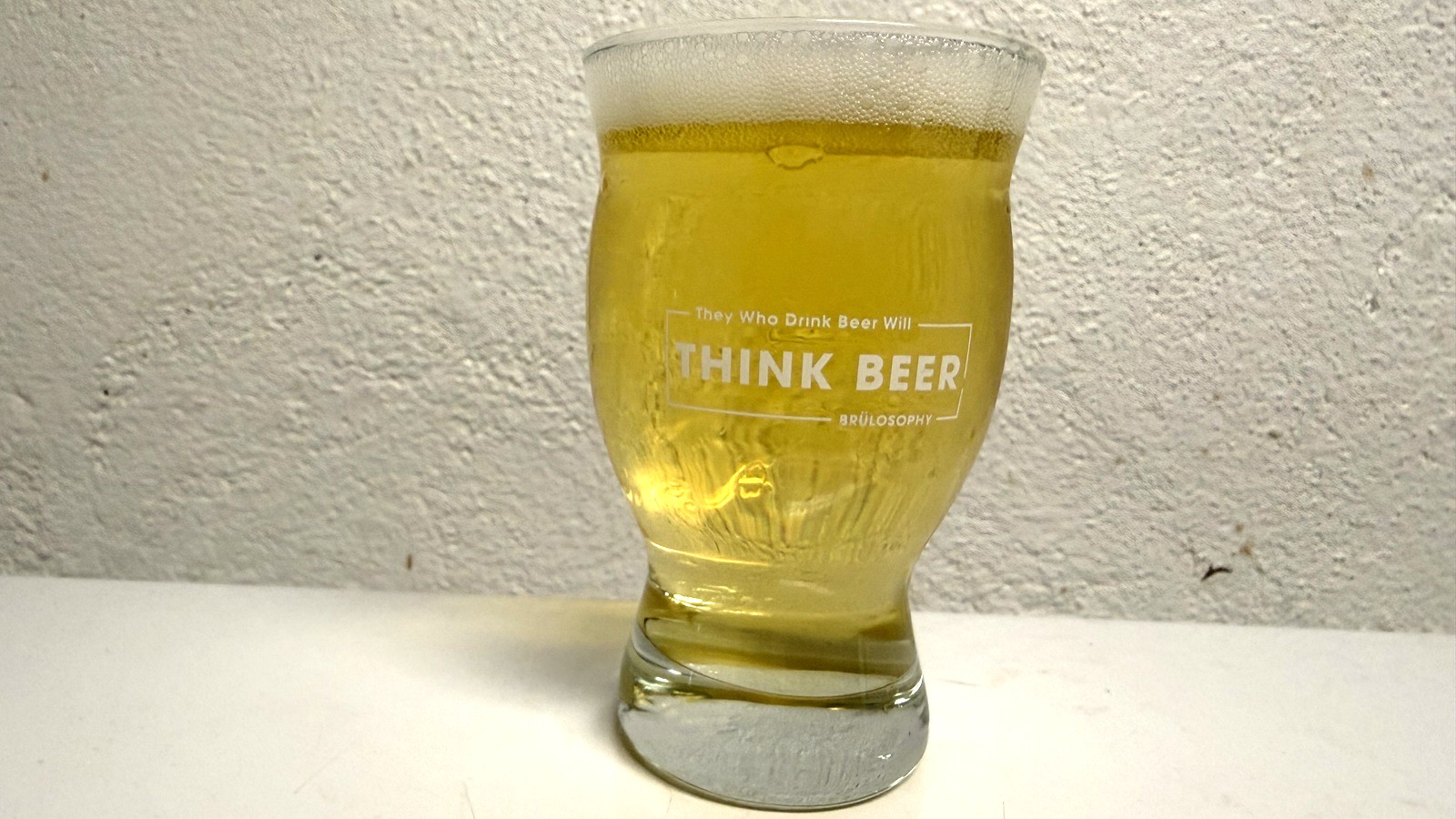
My Impressions: I was very pleased with this beer. The only thing keeping it from being a world-class example of the style was a smidge of butter flavor I detected when it was fresh; however, this faded over time, resulting in a super clean and delicious West Coast Pils.
| CONCLUSION |
As is often the case with novel styles, it can be difficult to nail down a precise description that is universally agreed upon. While this is certainly the case with West Coast Pils, one general idea that most accept is that it’s a sort of a mash-up of German Pils and West Coast IPA, melding crisp crushability with a potent punch of modern hoppiness.
Despite the norm being to ferment West Coast Pils somewhat warm with a traditional lager yeast, most other aspects of the brew day are approached from a classic perspective to avoid various issues. Interestingly, tasters of this Short & Shoddy version where several corners were cut during the brewing process not only seemed to think it was a good example of the style, but they rather enjoyed drinking it as well. Moreover, out of 26 tasters, just 3 felt the perceived off-flavors, and only 2 of them agreed on detecting astringency. Perhaps their palates are uniquely attuned to these flavors, but the simpler and more likely explanation is that these are outliers.
Having brewed a few Short & Shoddy batches over the years, my anxiety level has palpably decreased, though I still find myself questioning my life decisions during these brew days. In this case, it was all for naught, as I felt this Short & Shoddy West Coast Pils was excellent. While I did pick up what I thought was hint of diacetyl when fresh, after a few more weeks of conditioning, that completely faded, leaving a crisp, clean, and very hoppy beer that I was sad to see go. Whether already a lover of West Coast Pils, or someone who has been curious to taste the hype, I’m confident this recipe would be well received.
If you have thoughts about this Short & Shoddy brew, please feel free to share it in the comments section below!
Support Brülosophy In Style!


Follow Brülosophy on:
FACEBOOK | TWITTER | INSTAGRAM

If you enjoy this stuff and feel compelled to support Brulosophy.com, please check out the Support page for details on how you can very easily do so. Thanks!





5 thoughts on “Short & Shoddy | West Coast Pils”
To your first point, I am not convinced that a west coast pil should qualify as a unique style. It seems very similar to a bohemian pil, but for hop heads. Even the yeast is German. In fact your recipe is not substantively different from my British golden ale (I use a bio transformative German lager yeast). It appears that the same recipe keeps being reinvented for marketing purposes. Having said that, given the high IBU hop forwardness of this beer and the hops selected, I am surprised that fruitiness and wine like flavours were not rated as more pronounced or mentioned. Hmmm. Cheers
I’m very curious about this style. I am in Northern Italy, practically on the border with Austria and Slovenia. Here, I have been told, younger people are looking for IPAs. This beer style could be the bridge between traditional and modern.
Personally, I don’t think I like dank/catty. Would that be coming from the Nelson Sauvin? Second, I am not sure about the dry hop schedule. Is the dry hop really for only 2 minutes, and the Incognito Citra the only one dry hopped for 10 minutes? Finally, what temperature is the hop stand?
Sorry those DH timings should be days – getting this fixed. Honestly any of these hops could be providing what some perceive as dank/catty. I add my WP at flameout, so it tends to be about 190-185 for the bulk of the time it spins.
Sounds interesting, I’d like to give it a try. I’m curious about the dry hop times though. 10 minutes for the Citra hops followed by 2 minutes? Did you mean to say minutes? Thanks
Sorry those should be days – getting this fixed.